
Try this thought experiment. It's 2 a.m. There's water spraying from somewhere in the basement ceiling. You're on a work trip in another time zone. The babysitter is at the house with your kids. They call you, panicked.
Quick: where's the water shutoff for the whole house?
If your honest answer involves the words "uh," "I think," or "let me Google it," your emergency plan isn't a plan. It's a wish.
A real home emergency plan is something anyone in your house, including a teenager or a sitter or your visiting in-laws, can use without your help. It's also one of the easiest things to set up, and one of the highest-impact features of any home management tool.
Dib's emergency prep features turn the "I'll figure it out in the moment" approach into a calm, written-down plan that actually works.
What goes into a real home emergency plan?
A good emergency plan covers the things you'd need in a hurry and the things you'd want to share with someone helping you in a hurry. Roughly:
- Critical shutoffs: water main, gas, individual fixture shutoffs, electrical main, individual breakers.
- Critical contacts: family members, doctor, vet, insurance, alarm company, neighbors with keys, trusted plumber, electrician, HVAC.
- Critical locations: spare keys, fire extinguishers, smoke and CO detectors, first aid, flashlights, generator (if you have one), evacuation routes.
- Critical documents: insurance policy, mortgage, deed, medical info, photos of ID.
- Critical info: allergies, medications, security codes (shared securely), pet care info.
Most people have all of this rattling around in their head. The point of writing it down is that emergencies are exactly when your head is least useful.
Why this is worth doing now, not later
Emergencies are rare on average, dramatic when they happen. The honest reasons to set up a plan today:
- Time pressure changes everything. "I'll Google the gas company" is fine on a Tuesday afternoon. At 11 p.m. with a gas smell, you want a one-tap call.
- Other people will use your house. Babysitters, dog sitters, house sitters, your kids alone for the first time, visiting relatives. They shouldn't have to phone you for basic info.
- You won't be the calm one. When something is on fire or flooding, your decision-making degrades. Pre-decisions save bad live decisions.
- Insurance rewards preparedness. Shorter response times to leaks, fires, and theft attempts mean smaller claims and sometimes lower premiums.
- It takes maybe an hour. Most of the benefits land from the first 30 minutes of setup.
How Dib's emergency prep works
One screen for "where everything is"
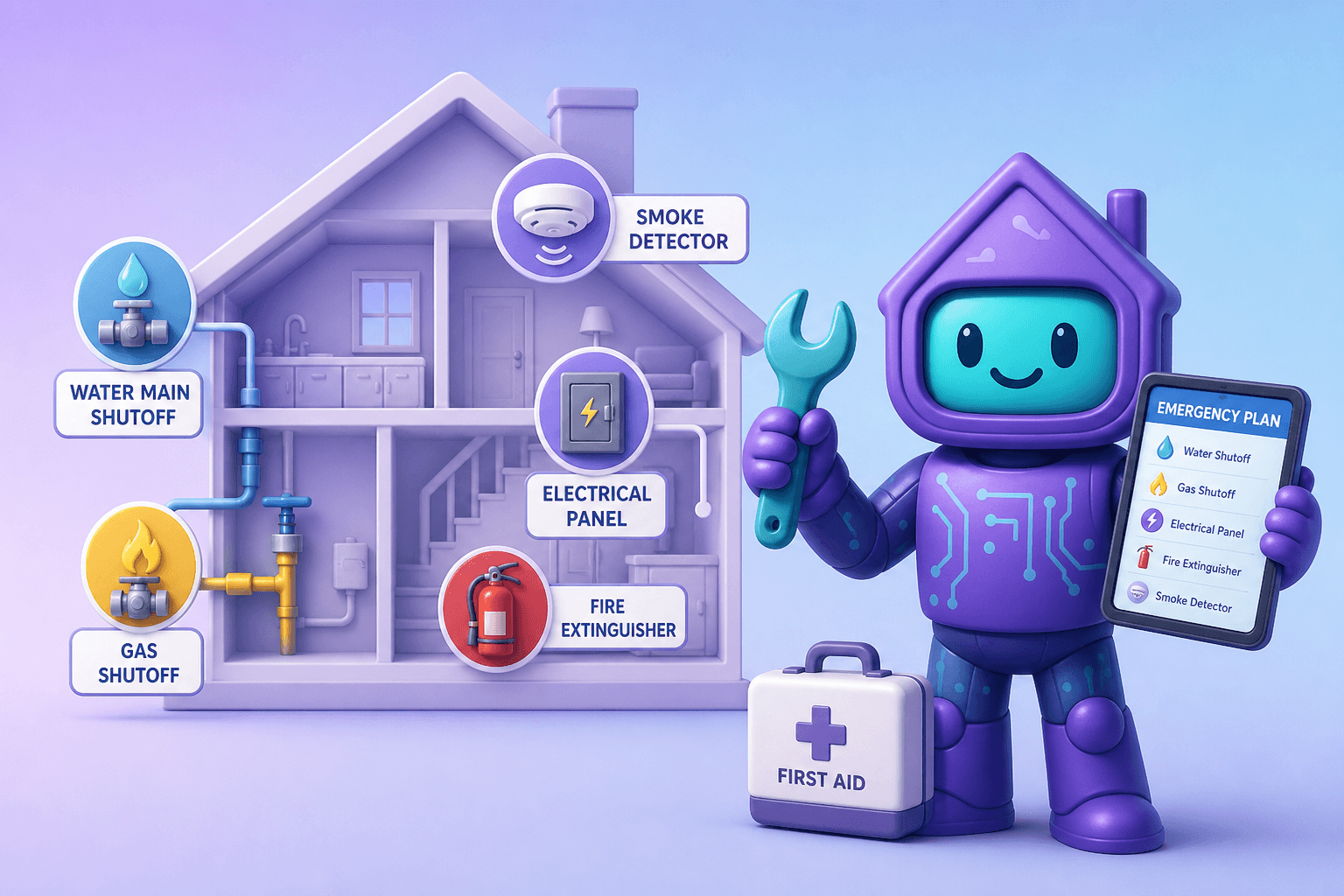
Critical shutoffs and locations get photos and quick descriptions tagged to the rooms where they live. Anyone tapping "emergency" can see:
- Where the water main shutoff is, with a photo
- Where the gas shutoff is
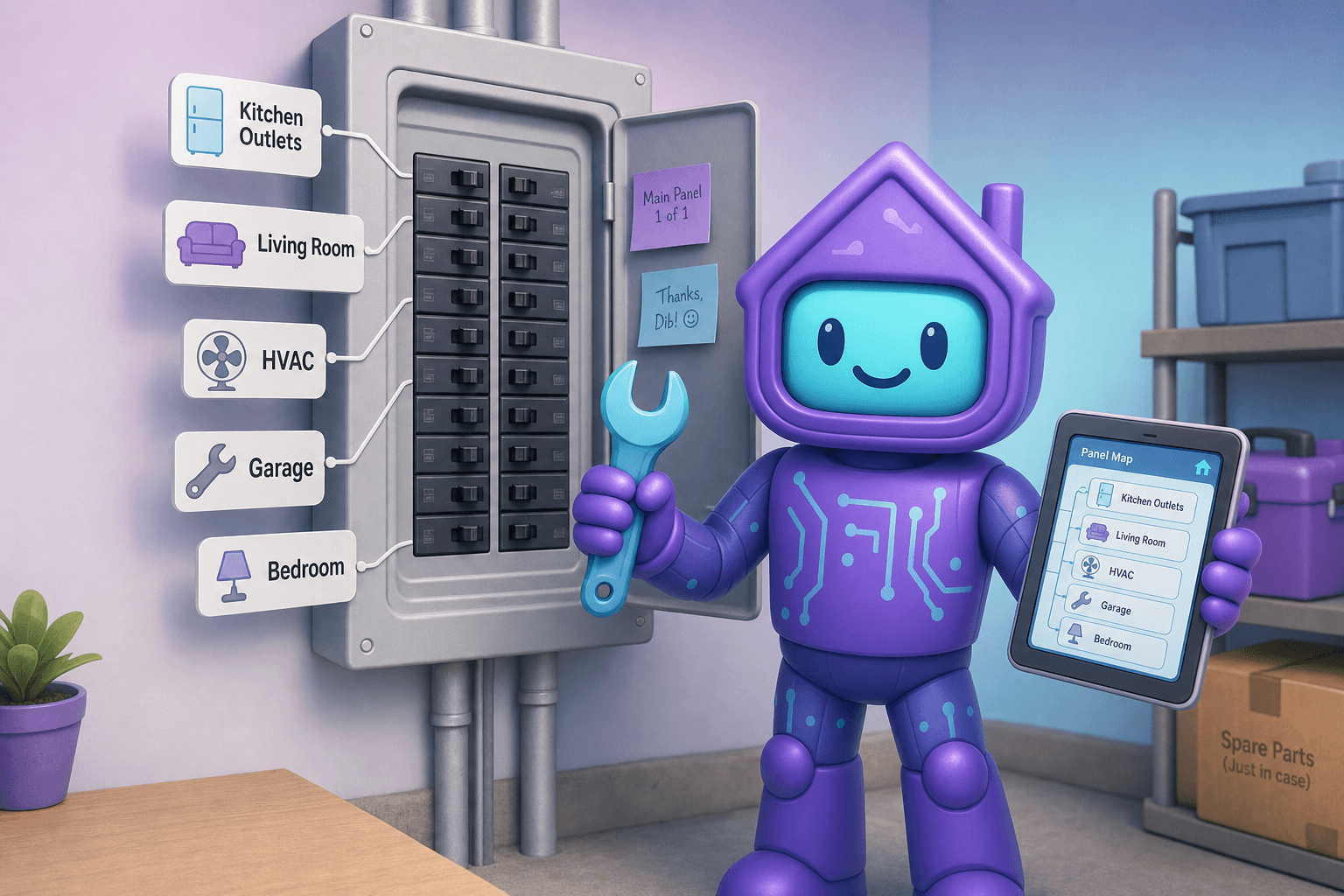
- Where the electrical panel is, and a labeled photo of the panel itself
- Where fire extinguishers, smoke detectors, and the first aid kit live
- Where any backup power lives
One-tap emergency contacts
A short list of the numbers that matter when seconds count: family, plumber, electrician, HVAC, vet, insurance, alarm company. One tap to call.
A shareable emergency link
This is the magic part. You can generate a secure share link that gives someone (a sitter, a neighbor, a contractor, a visiting parent) view-only access to your emergency info without giving them your whole Dib account. The link can be set to expire. They get the info they need, you stay in control.
Linked to your inventory and documents
Your insurance policy from the documents vault shows up alongside the emergency screen. Your appliance and home inventory powers smoke-detector counts and recall checks. Nothing's duplicated.
Reminders that keep it fresh
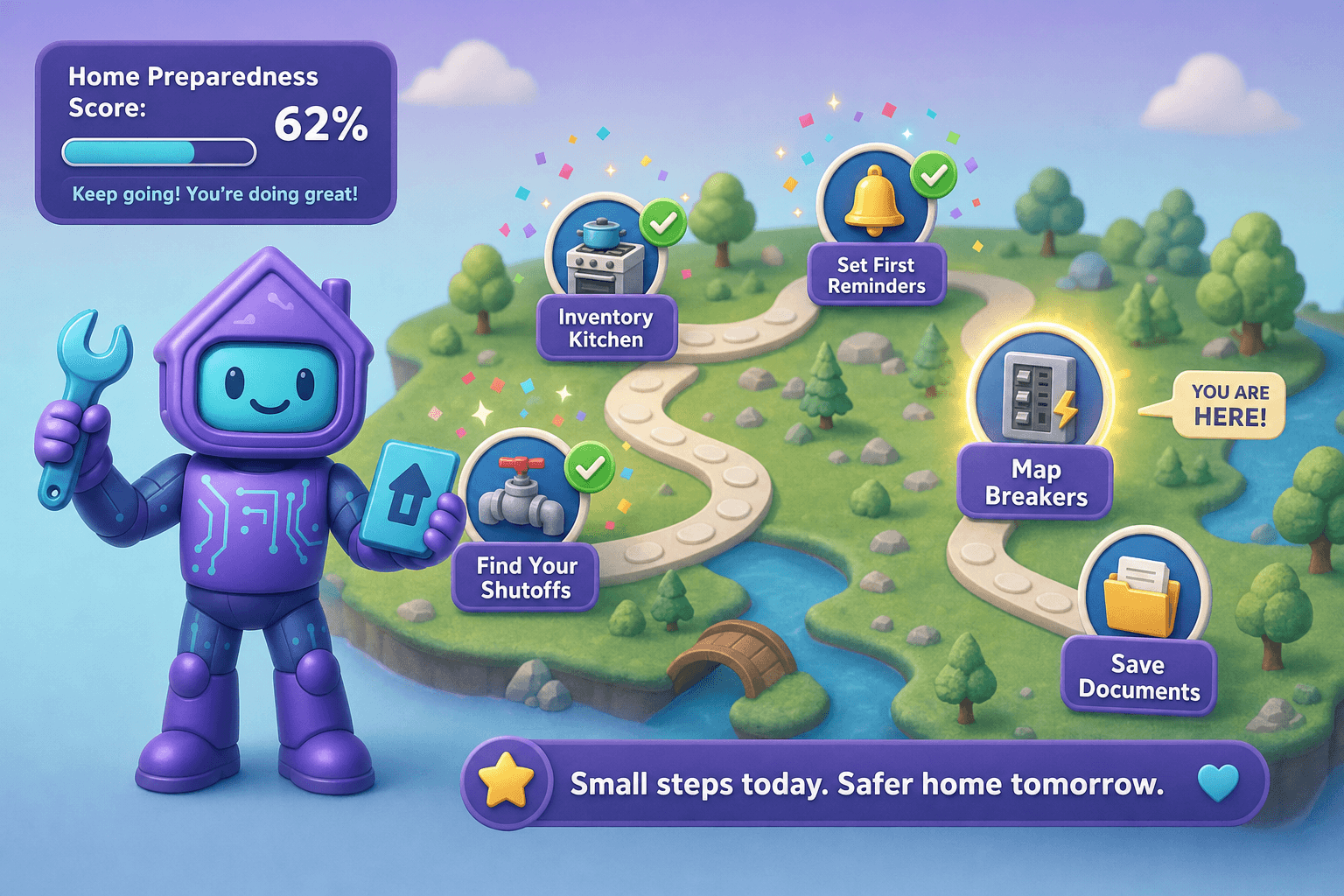
Test smoke detectors quarterly. Check fire extinguisher dates yearly. Refresh first aid supplies twice a year. These hook into the reminder system so your plan doesn't quietly age into uselessness.
Picture this
You're out of town. Your teenager texts: "There's a weird beeping in the basement and I think there's water." You're 1,500 miles away.
Instead of trying to walk them through the house over the phone, you say "Open the Dib emergency link I sent you." Five seconds later they're looking at a labeled photo of your basement with the water main valve circled, the sump pump's quick-test page, and the plumber's number.
They shut the water off, call the plumber, and the situation gets handled before any real damage happens. Without the plan, the same situation might be a flooded basement, a damaged water heater, and a five-figure claim.
Same idea applies in less dramatic ways: a neighbor watering plants, a sitter who needs the gate code, a contractor who needs to know where the panel is. They open the link, find what they need, leave you alone.
Tips to build a useful (not theoretical) plan
- Start with shutoffs and contacts. That's 80% of the value. The rest can wait.
- Photograph everything important once. A labeled photo of your breaker panel is worth a thousand words.
- Walk the house with your partner or kids. What would you do if it were just them? What gaps does that surface?
- Use the share link for sitters and house guests. Set an expiration so the access doesn't linger forever.
- Test it once. Pretend you're a sitter. Can you find the gas shutoff using only what's in Dib? If not, add what's missing.
- Set a yearly reminder to revisit. Phone numbers change. Pros retire. The plan needs a 15-minute refresh once a year.
Frequently Asked Questions
What counts as a "home emergency" plan, really?
Any plan that helps you (or someone else in your house) act calmly during a water leak, gas leak, electrical issue, fire, severe weather, medical issue, or break-in. It's also useful for less dramatic things: a sitter who needs the wifi password and dog medicine info.
Do I have to share this with anyone, or can it just be for me?
Either way. Most of the value comes from having the info written down for yourself, even before sharing. Sharing is bonus.
Is the shareable link secure?
Yes. The link is unique, can be expired or revoked at any time, and gives view-only access to only the emergency information you've chosen to expose, not your full account. It's designed exactly for the "give the sitter what they need, not everything" use case.
Does this replace my homeowners or renters insurance?
Definitely not. An emergency plan helps you respond faster and document better, which can complement your insurance. But it's not a substitute for the policy itself. Pair this with the documents vault so your insurance info is also one tap away.
What about emergencies outside the house, like wildfires or evacuations?
Dib's emergency prep handles the "what's where in the house" side and the "who do I call" side. For wildfire and evacuation specifics, you'd combine that with your local emergency management's guidance. The shared link makes it easy to send your emergency info to family during a stressful event.
Is there a "go bag" checklist built in?
Yes. You can build a checklist of evacuation essentials (documents, meds, chargers, pet supplies) so you're not assembling it under pressure. It's part of the prep workflow, not a separate app.
Ready to make a plan you'd actually use?
Open Dib and add three things this week: water shutoff photo, gas shutoff photo, and three emergency phone numbers. That's the smallest possible plan that actually helps in a 2 a.m. moment.