
Every house has a story, even if nobody's bothered to write it down. The roof was redone in 2017. The kitchen was remodeled in 2021. A pipe burst in the bathroom one cold January and got fixed by a plumber whose name is in someone's old text thread. The dog scratched the back door so badly you had it replaced. The bedroom you painted three different shades of off-white before settling on a fourth.
Most of that history evaporates within a few years. The receipts get tossed. The contractor's number changes. The "before" photos sit in a phone that no longer exists. Eventually the only person who remembers any of it is you, and your memory is fuzzy on the dates.
This is a real loss. Home history has value for the next owner, the appraiser, the insurance company, and honestly, for you. Dib's home timeline and home story features are built to keep that history alive.
What is a home timeline and home story?
Two related ideas:
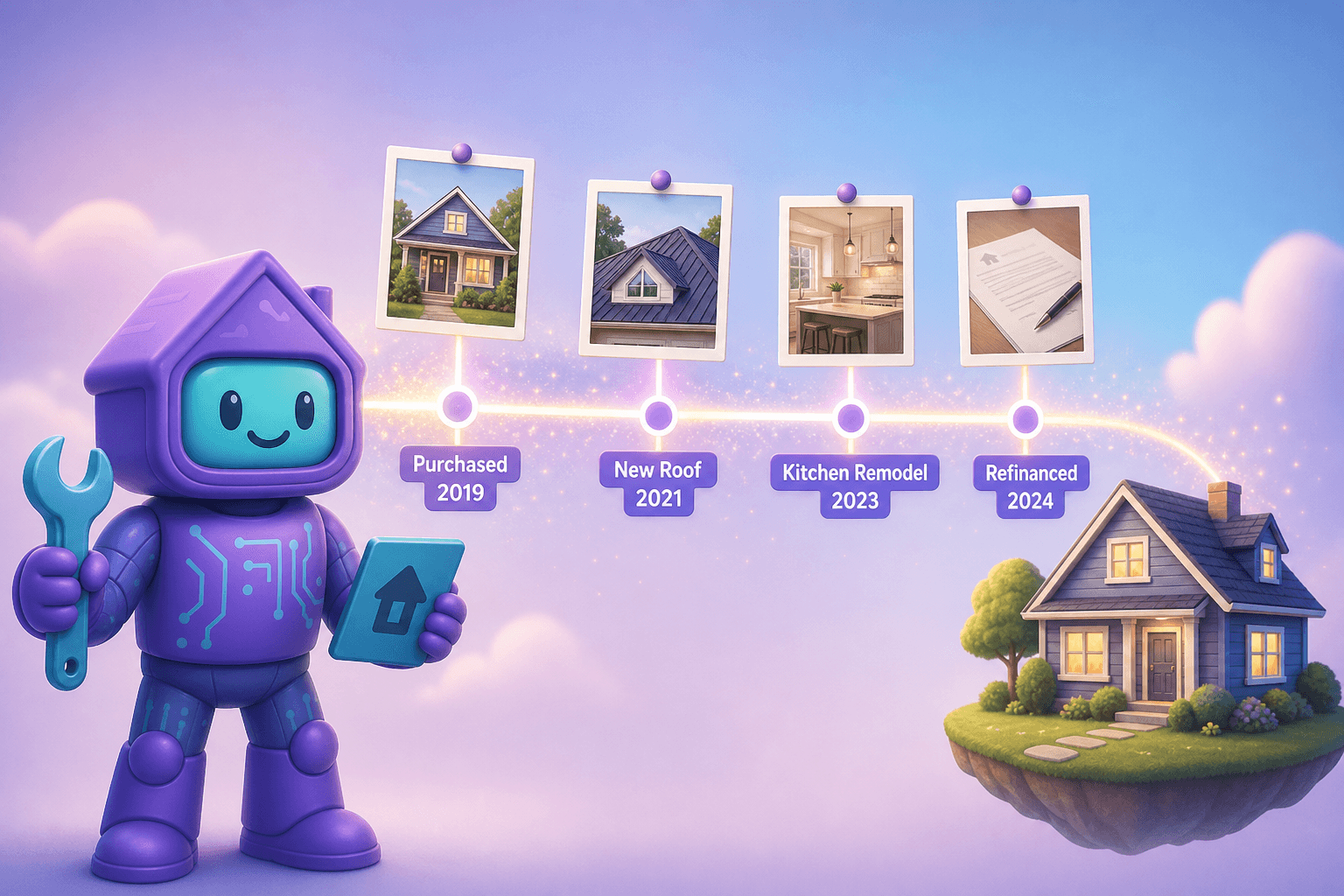
- Home timeline is the chronological view of everything that's happened to your house: purchase, renovations, repairs, appliance replacements, paint jobs, big incidents (flood, fire, hailstorm), inspections, refinances. Scroll the timeline and you see the house's life story.
- Home story is the narrative version: a writeup of who built it, who's lived in it, what was changed and why, and what makes this home distinctive. Some people treat it like a journal. Others treat it like an attic full of letters for the next family.
Both feed off the same underlying data: your inventory, projects, maintenance log, and documents. The timeline and story view just present that data in a way that feels like history rather than spreadsheets.
Why home history matters more than you'd think
- Resale impact. Buyers and appraisers consistently pay more for homes with documented histories. "Roof replaced 2019, full receipts available" beats "roof seems fine." We dug into the financial side in boosting your home's value and why documenting your home's history pays off.
- Insurance ease. Claims after disasters move faster when you can prove what was there. A timeline showing the 2022 kitchen remodel with photos and receipts is far stronger than "we remodeled at some point."
- DIY decisions. When you go to replace something or refresh a room, the history tells you what's been done, by whom, with what materials. No starting from scratch.
- Emotional value. Most people don't think about this until they leave a house: there's something nice about handing the next owner a real record of what's been loved and cared for. Especially in homes that have been in a family for a while.
- Continuity through change. Partners get added or removed, kids grow up, memories blur. A timeline is the calmest way to remember the house you actually lived in.
How Dib's timeline and home story work
A scrollable timeline of your home
Every meaningful event you've captured in Dib (purchase, projects, repairs, replacements, appliance upgrades, maintenance, inspections, key documents) lands on the timeline in chronological order. You scroll it like a photo memory app for your house.
Auto-generated, then human-edited
You don't have to type your home's history from scratch. The timeline is built from what you've already captured in inventory, projects, and maintenance. You can then add narrative notes, captions, milestones, and personal context where it adds value.
Home story view
A more narrative format: chapters or sections with photos and prose. Some people use this for genuinely sentimental purposes (the house their kids grew up in). Others use it for resale (a curated story that paints the house as well-cared-for). Both are valid.
Export and share
Export the timeline as a clean PDF for a buyer, appraiser, insurance adjuster, or family member. The data is yours, in a format anyone can read.
Tied to everything else, automatically
Add an item to inventory: timeline event. Finish a project: timeline event. Log a major repair: timeline event. The timeline isn't a separate thing you maintain. It's a byproduct of using Dib the rest of the time.
Picture this
You're getting ready to sell the house. The realtor asks "anything we should know about the place?"
Instead of trying to remember everything from the last decade in one conversation, you export your home's timeline. Roof replaced in 2017 (receipt and warranty attached). Kitchen remodeled in 2021 with photos and finishes documented. HVAC serviced annually (logs attached). A history of paint colors, room by room.
The realtor uses it in the listing. The buyer's inspection report has fewer surprises because you already know what's been done. The home shows better, sells faster, and trades closer to asking price.
Or take a different angle. You're selling a house your family lived in for 20 years. Your kids grew up there. You write a one-page home story that captures the personality of the place. Most buyers will skim it. One buyer will read it carefully and feel something. That's the buyer who pays a little more because they connect.
Or take the most personal angle. You've lived somewhere for ten years and you just want to be able to scroll back through what happened and when. The dog you adopted. The room you painted yellow before regretting it. The blizzard that took out the back fence. Future-you will be very glad past-you wrote it down.
Tips to make the timeline genuinely useful
- Add purchase day photos to the timeline. A wide shot of every room on day one is golden later.
- Capture life events, not just home events. "New baby, repainted nursery" is more useful (and more readable) than just "nursery repainted."
- Backfill carefully. Don't try to reconstruct everything that happened over the last decade in one weekend. Pick the five biggest events and let the rest fill in naturally.
- Use the photo timeline for renovations. Before, during, and after photos of any project make the home story dramatically richer.
- Refresh the home story once a year. Add the year's milestones. Takes 20 minutes and keeps the record current.
- Pair with home value tracking for resale prep. The timeline becomes a real asset when it's time to list.
Frequently Asked Questions
Do I have to be planning to sell to make this worth it?
Not at all. Many people use the timeline as a personal record of their home, with no resale intention. The benefits at resale are real, but they're a bonus. The everyday benefit (knowing what's been done and when) is enough on its own.
What if I just bought the house and have no history yet?
Even better. The timeline starts on day one. We have a separate post about exactly this situation: the new homeowner documentation checklist.
Can I add history from before I owned the house?
Yes. Disclosure documents, previous inspection reports, public records, and even neighborhood lore can be added to your timeline as "history before us." It's especially valuable in older homes where the previous owners did meaningful work.
Is this a "scrapbook," or is it functional for resale?
Both. The same data powers both views. Some people lean toward the personal scrapbook side, others toward the resale-ready PDF. You can use it however fits your situation.
What happens to my home story when I move?
Your data is yours. You can export the previous home's full record, hand it to the buyer (a genuinely thoughtful gift), and start fresh on the new home. The new home's timeline begins on day one.
Does Dib remember if my house is older or has historic value?
You can capture whatever's relevant: build year, architect, historic register status, neighborhood context. There's no "must include" list. Capture what matters to your house.
Ready to start the story of your home?
If you're already adding inventory, projects, and maintenance to Dib, your timeline is already taking shape in the background. Add a one-line milestone for the most important event of the past year. That's the first chapter.